

How to Become a Pediatric Nurse in India
A Path to Rewarding Career in Child Care
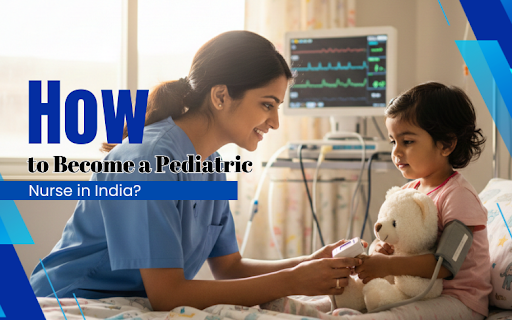
If you are interested in Pediatric Nursing, it reveals two things — your love for children and your interest in a profession that allows you to care, nurture, and heal. In today’s fast-paced, efficiency-driven world, this nursing specialty stands out because it values patience, compassion, involvement, and emotional connection.
Pediatric nurses provide specialized medical care to infants, children, and adolescents in hospitals, clinics, and community healthcare settings. To become a pediatric nurse in India, you must complete 12th standard (PCB) and a B.Sc Nursing degree from an INC-recognized institution. After registering with your State Nursing Council, you can pursue a pediatric nursing specialization. This guide gives you a complete walkthrough on how to become a pediatric nurse in India.
Pediatric Nurses – Role and Significance
Pediatric nurses play an essential role in delivering age-appropriate healthcare to infants, children, and adolescents. They assess growth and development, perform clinical evaluations, monitor vital signs, and assist pediatricians in treating both acute and chronic conditions.
Their presence ensures early detection of health issues, safe medication practices, continuous parental guidance, and empathetic support. With their blend of clinical skill and compassionate care, pediatric nurses significantly improve child health outcomes and strengthen overall pediatric healthcare services.
Steps to Become a Pediatric Nurse in India
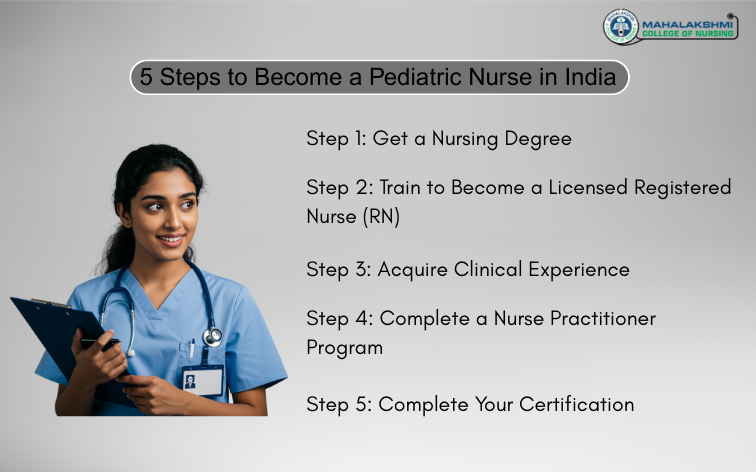
Step 1: Get a Nursing Degree
The first step toward becoming a pediatric nurse is completing a formal nursing education. Most students pursue a B.Sc Nursing, a four-year program that builds strong foundations in medical science and clinical care.
Some candidates begin with ANM (Auxiliary Nursing Midwifery) or GNM (General Nursing & Midwifery) and later transition to B.Sc Nursing through a bridging course. This academic groundwork ensures you gain the theoretical knowledge and clinical exposure needed for pediatric practice.
Step 2: Train to Become a Licensed Registered Nurse (RN)
To qualify as a Registered Nurse (RN) in India, you must complete 10+2 with science subjects and then obtain a GNM diploma or B.Sc Nursing degree.
Registration with the State Nursing Council is mandatory. Becoming a licensed RN ensures strong clinical skills, high-quality training, and strict adherence to professional standards.
Step 3: Acquire Clinical Experience
Clinical experience is vital for anyone aspiring to specialize in pediatric nursing. After completing your education, you should work in settings such as pediatric wards, neonatal units, family practice clinics, or children’s hospitals.
Hands-on experience helps you apply your knowledge, build clinical confidence, and understand the unique medical, emotional, and developmental needs of young patients.
Step 4: Complete a Nurse Practitioner Program
Many universities in India offer Nurse Practitioner (NP) programs that enhance advanced clinical skills. Completing an NP program strengthens your ability to make independent clinical decisions and manage pediatric cases effectively.
This advanced qualification also opens opportunities for leadership and specialized clinical roles in the pediatric healthcare sector.
Step 5: Complete Your Certification
To gain deeper expertise, nurses often pursue Post Basic certifications such as:
- Pediatric Nursing
- Neonatal Nursing
- Psychiatric Nursing
- Emergency & Disaster Nursing
- Cardio-Thoracic Nursing
These certifications require additional coursework and clinical training, helping you stand out and improve your professional competence.
If you have completed your 12th standard and wish to study nursing in Trichy — join Mahalakshmi College of Nursing and begin your journey along with other passionate nursing aspirants!
Conclusion
Becoming a pediatric nurse in India is a rewarding and structured journey that blends rigorous education with compassionate hands-on care. Each step — from gaining essential nursing qualifications to pursuing advanced certifications — equips you with the skills, confidence, and empathy needed to support the health and development of children.
As the demand for skilled pediatric professionals continues to grow, this career path offers immense stability, purpose, and the opportunity to make a lasting difference in the lives of young patients and their families.
Related Guides
- How to Become a Registered Nurse (RN)
- How to Become a Medical-Surgical Nurse
- How to Become an Obstetrics and Gynaecological Nurse
- How to Become a Psychiatric Nurse
- How to Become a Community Health Nurse
FAQs
A pediatric nurse specializes in caring for infants, children, and adolescents up to 18 years, with expertise in child development, pediatric diseases, and vaccinations. Regular nurses provide care to patients of different ages, often with a focus on adults, across various departments.
Complete B.Sc Nursing (or GNM followed by Post Basic B.Sc), register with your State Nursing Council, gain clinical experience, then pursue M.Sc Pediatric/Child Health Nursing or pediatric-focused experience/certifications for specialization.
Pediatric nurses typically earn anywhere between ₹2.5–₹6 lakhs annually. The salary range can differ based on the place they work—Government hospitals, private hospitals in metros, AIIMS, and top corporate hospitals.
Managing critically ill children, handling emotional distress from child suffering and death, dealing with anxious parents, working night shifts, and performing procedures on uncooperative young patients.
The age limit for a pediatric ward is typically up to 18 years of age, but this can vary based on the hospital location and policies.
Here is the typical career growth of a pediatric nurse: Staff Nurse → Senior Pediatric Nurse (3–5 years) → Ward In-charge (5–7 years) → Nursing Supervisor (8–10 years) → Assistant Nursing Superintendent → Chief Nursing Officer. Options include NICU specialist, lactation consultant, or pediatric nursing faculty.